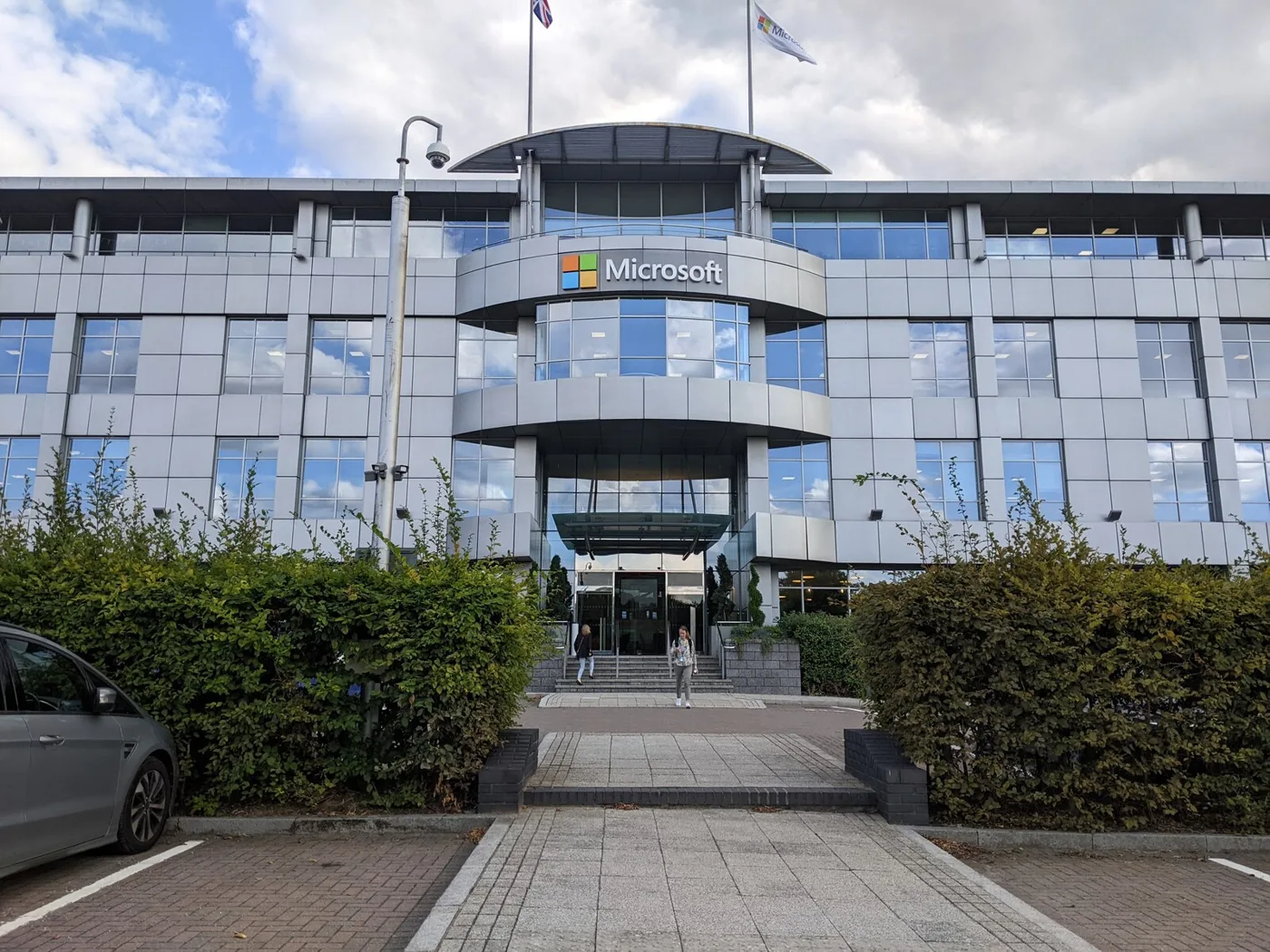

A 72MW data centre is planned on Microsoft's Thames Valley Park campus, with comments open to 29 October. 399 of 455 people the developer asked objected.
Wokingham Borough Council is taking comments on plans to knock down Microsoft’s offices at Thames Valley Park and build a data centre on the site. The consultation closes on Thursday 29 October.
The outline application, 262274, was registered on 28 September (council planning register). The applicant is FH Trustees Limited, as trustee of the landlord’s unit trust. By 12 October the council had already published 71 public comments on it.
Thames Valley Park sits on the eastern edge of Reading, in Sonning parish and the borough’s Thames ward, about four miles north-west of Wokingham town centre. The Great Western main line runs along the southern edge of the site, with homes in Earley beyond it.
What is proposed
The developer’s planning statement, written by Arup, sets out a 72MW data centre on a 5.4 hectare site (planning statement). It would replace three office buildings with 22,867 sq m of floorspace.
The scheme includes:
- four three-storey data hall buildings, with up to 37,000 sq m of floorspace
- a maximum building height of about 30.5 metres, including rooftop plant
- gas-fed solid oxide fuel cells generating up to 42.5MW on site
- back-up generators, with flues up to 30.5 metres
- a substation, a security lodge and 72 car parking spaces
- a main entrance from the Thames Valley Park estate road, plus an emergency access
Only the access is being decided now. The layout, design and appearance would come later, in reserved matters applications.
Why the offices are going
The planning statement says Microsoft has already left two of the three buildings. It holds a lease on the third until December 2027 and will leave then. The developer says it understands Microsoft is under offer for about 73,500 sq ft in the neighbouring Here building, less than a third of its old footprint.
The statement argues there is little demand for out-of-town offices. It cites CoStar figures of about 895,000 sq ft of empty office space on the Reading fringe, a vacancy rate of 17.1%, and an average of 59.4 months to let a building.
Gas power until 2037
The data centre would not run on grid electricity at first. The developer’s energy strategy, by Tyrens Hilson Moran, sets out two phases:
- 2028 to 2037: fuel cells running on natural gas supply 42.5MW. Only the office block, at 1.8MW, uses the existing grid connection.
- From 2037: a 60MW or 110MW grid connection arrives. The developer’s preferred option is then to remove the fuel cells and run from the grid.
The strategy gives this as the date by which extra grid capacity will be available at the latest. It estimates 1.3 million tonnes of CO2 equivalent from the first phase, 2028 to 2037. Over a 60-year life, keeping the fuel cells on gas would mean about 8.4 million tonnes in total, against about 2.1 million if they are removed.
The developer says fuel cells produce no nitrogen oxides or particulates because they do not burn the gas, and that the data centre would need no substantial water once running.
Jobs: two different figures
The planning statement says construction would support up to 245 jobs and the finished data centre “at least 40-65 full-time positions”. It puts the investment at more than £200 million.
The developer’s consultation report, filed with the same application, gives a different operational figure: “at least 115 full-time equivalent roles”. The documents do not explain the gap.
What people told the developer
The developer held a public exhibition at Pearson Hall, Sonning, on 7 July, attended by about 160 people. Invitations went to 1,640 properties. Its Statement of Community Involvement, by Alpaca Communications, reports the results.
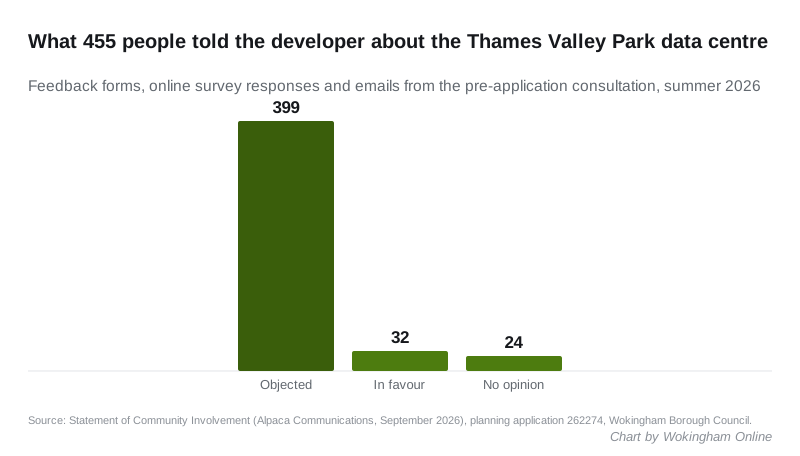
Of 455 people who returned a form, filled in the online survey or emailed, 399 objected, 32 were in favour and 24 had no opinion. The concerns it lists include:
- noise near homes and the Thames Valley Park nature reserve
- water use
- air pollution
- the use of gas fuel cells and the site’s energy consumption
- “heat island” effects
Support for new jobs in the borough also came up.
The Sonning local gap
The site is in Sonning parish. The Sonning Neighbourhood Plan has passed examination and is awaiting a referendum. Its policy SNP/ENV1 protects a local gap between Sonning and Thames Valley Park, covering the woodland and open land east of the site. The planning statement accepts the policy is relevant and says it is dealt with in the technical reports.
Public meeting on Friday
Sonning Parish Council is holding a public meeting on the plans, supported by Earley Town Council, on Friday 16 October at 7pm at Pearsons Hall, Pearson Road, Sonning, RG4 6UL (Earley Town Council). It is open to Earley and Sonning residents. Places are limited, so you need to book through Eventbrite.
What it means for you
- To comment, use the council’s register for application 262274 before 29 October. Comments are published with the documents.
- The register lists the application for a delegated decision, made by officers rather than the planning committee. That status can change.
- Living in Earley, Woodley or Sonning? The noise, lighting and landscape reports in the application cover views and sound from your side of the railway. They are worth reading before you write.
More planning decisions and applications are on our Wokingham planning news page.
Sources
- Wokingham Borough Council planning register, application 262274 (description, applicant, dates, consultation period 1 to 29 October 2026, decision level)
- Application documents: Arup cover letter (25 September 2026), Planning Statement (Arup), Energy Strategy Report (Tyrens Hilson Moran, 24 September 2026), Statement of Community Involvement (Alpaca Communications, September 2026), and 71 published public comments dated 2 to 12 October 2026
- Earley Town Council: Data Centre, Thames Valley Park public engagement meeting (9 October 2026)
Have your say