
Wokingham Borough Council expects to overspend by £2.5m this year, mostly on adult social care, and its schools SEND deficit is forecast to reach £77m by March.
Wokingham Borough Council expects to spend £2.5 million more than its budget this year. Adult social care and children’s services account for almost all of it.
The forecast is in the council’s second-quarter budget monitoring report, which goes to the Executive on Thursday 29 October (revenue monitoring report, Executive 29 October 2026). The exact figure is £2,548,000 on a net budget of £210.2 million. The report says that is £700,000 better than the forecast three months ago.
A bigger gap sits in a separate account. The council’s schools budget for children with special educational needs is now forecast to be £77 million in deficit by 31 March 2027.
Where the money is going
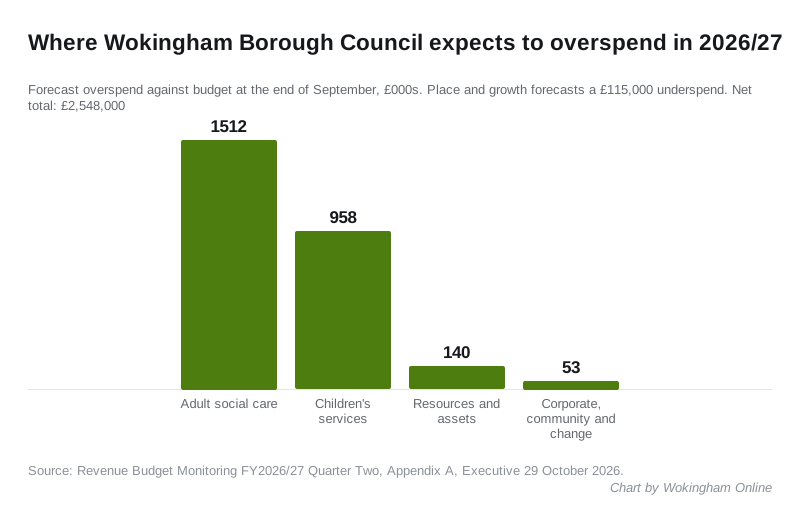
The report breaks the forecast down by department (Appendix A):
| Department | Budget | Forecast | Over (under) spend |
|---|---|---|---|
| Adult social care | £86.5m | £88.0m | £1,512,000 |
| Children’s services | £57.0m | £57.9m | £958,000 |
| Resources and assets | £14.6m | £14.8m | £140,000 |
| Corporate, community and change | £4.2m | £4.3m | £53,000 |
| Place and growth | £47.9m | £47.8m | (£115,000) |
| Total | £210.2m | £212.8m | £2,548,000 |
The report gives these reasons:
- Adult social care: population growth and more complex needs, a “more significant rise than seen in previous years”.
- Children’s services: the number of children in care is stable, but placements cost more, “with a few cases costing more than double the average budgeted”. Costs for unaccompanied asylum-seeking children are being met from one-off grants and reserves.
- Resources and assets: delays to the contract at Cantley Park, and higher running and empty-building costs for council property.
- Place and growth: an underspend, helped by the start of the new bin collection contract. The report also lists pressures there: enforcement staffing, demand for bus passes, a grass-cutting saving that cannot be delivered and delays to on-street parking charges.
The council is also trying to deliver about £8 million of savings this year.
The reserve it would come from
An overspend at the year end is paid from the council’s general reserve. That reserve stood at £10.1 million on 31 March 2026. If the forecast holds, it would fall to about £7.5 million by 31 March 2027 (Appendix B).
The report stresses that it is “early in the year” and that work will continue to improve the position.
Council housing account
The separate account for the council’s own homes is forecast to overspend by £498,000. The report puts this down to temporary staff and system costs while the housing service is reorganised.
That would be covered from the housing reserve. After this year’s planned use, the reserve would be left at about £300,000 on 31 March 2027. The council’s own target is 5% of spending, which the report puts at £1.08 million. It says the reserve will be rebuilt through budget setting for 2027/28, and that the national rent policy of CPI plus 1%, plus a convergence amount, will help.
The SEND deficit
The Dedicated Schools Grant pays for schools and for support for children with special educational needs. Its high needs block is where the pressure falls.
- The deficit carried into this year was £52.9 million.
- This year’s deficit is forecast at £24.1 million, £3.7 million more than the £20.4 million the council budgeted for.
- Together that makes a forecast £77 million cumulative deficit by 31 March 2027.
The report says the main cause of the extra £3.7 million is unexpected growth in placements at independent and non-maintained special schools, where costs are much higher. It links that to a shortage of places in the council’s own special schools (Appendix D).
The government’s Safety Valve programme, which helped councils with the largest deficits, ended on 31 March 2026. The report says the new High Needs Stability Grant will support up to 90% of a council’s cumulative deficit to 2025/26. Deficits built up after that, to March 2028, will be funded up to an “appropriate amount” that has not yet been set. Our earlier report covers the council’s £40 million plan for more SEND places in the borough.
The bigger problem from 2027
The report says the council expects to lose more than £43 million of government funding over three years under the Fair Funding Review. By 2028/29 its yearly funding would be about £20 million lower. The report calls it “the most significant and adverse funding settlement the Council has ever received”.
Officers are drawing up options for the 2027/28 budget. The report says Overview and Scrutiny will look at them “in the coming months”.
What it means for you
- Nothing changes yet. The Executive is only asked to note the forecast on Thursday. No service cut or charge is proposed in this report.
- Watch the 2027/28 budget. The council sets next year’s budget and council tax in February. With £20 million a year less funding coming, the options going to scrutiny this winter are where any cuts or new charges will first appear. Our council tax bands page has this year’s bills.
- Parents of children with SEND: the deficit does not change a child’s entitlement under an EHCP. It does explain why the council is pushing to open more places inside the borough rather than pay for independent schools.
- Council tenants: the housing reserve forecast is low, and the report points to rent rises under the national formula as part of the fix.
The Executive meets at 7pm on Thursday 29 October at Shute End. The meeting is open to the public (agenda).
Have your say